The CLARIS Smart Plus fits all current Jura machines - the E8, S8, Z10, ENA 4, and most machines released in the last five years. Replace it every 50 liters (roughly every two months at home use). If you’re on hard water, this filter is genuinely useful; in soft water areas it’s optional but still extends descaling intervals.
Current Jura Machines
CLARIS Smart Plus
For E8, S8, Z10, ENA 4, and all recent Jura models. Digital chip tracks remaining capacity.
Check Price →Older Impressa Models
CLARIS Blue
For J-series, F-series, and older ENA Impressa machines. Not interchangeable with Smart Plus.
Check Price →Which Filter Fits Your Jura Machine
Getting the right filter matters - Smart Plus and CLARIS Blue are not interchangeable. The filter housing and the machine’s sensor are different.
| Machine | Filter Type |
|---|---|
| Jura E8 (current gen) | CLARIS Smart Plus |
| Jura S8 | CLARIS Smart Plus |
| Jura Z10 | CLARIS Smart Plus |
| Jura ENA 4 | CLARIS Smart Plus |
| Jura J8 | CLARIS Smart Plus |
| Jura GIGA 6 | CLARIS Smart Plus |
| Jura GIGA 10 | CLARIS Smart Plus |
| Jura ENA Micro (older) | CLARIS Smart |
| Jura Impressa J9 | CLARIS Blue |
| Jura Impressa F7, F8, F9 | CLARIS Blue |
| Jura Impressa Z9 | CLARIS Blue |
| Jura Impressa E40, E60 | CLARIS Blue |
When in doubt, check your machine manual - Jura lists the filter type on page 1 or 2 of the setup section. You can also look at the filter slot: Smart Plus filters have a flat contact pad on the top that connects to the machine’s chip reader; CLARIS Blue does not.
How the Filter Actually Works
The CLARIS filter sits inside the water tank. All water passes through it before reaching the boiler.
The filter does three things:
Removes chlorine - Municipal tap water is chlorinated. Chlorine doesn’t damage the machine, but it affects taste. The filter removes most of it before brewing.
Removes heavy metals - Lead, copper, and zinc from older pipes are adsorbed by the filter resin. This is mostly a water quality benefit, not a machine protection benefit.
Partially softens the water - This is the mechanical benefit. The filter removes some calcium and magnesium ions - the minerals that form limescale inside the boiler. “Partially” is the key word: it reduces scale formation, it doesn’t stop it. You still need to descale on schedule.
What the filter does NOT do:
- It doesn’t completely prevent limescale
- It doesn’t improve crema or espresso extraction quality
- It doesn’t eliminate the need to descale
- It doesn’t filter bacteria or make unsafe water safe to drink
The practical result: in hard water areas, running the filter extends your descaling interval from roughly every 4-8 weeks to every 3-5 months. In soft water areas the extension is smaller because there’s less scale forming to begin with.
Best Value
CLARIS Smart Plus - Multi-Pack
Buy a 3-pack and you’re covered for the year. Cheaper per filter and one less thing to forget.
How Often to Replace the Filter
The official Jura recommendation is every 50 liters. At home use (2-4 coffees per day), that’s roughly every 6-8 weeks. Heavy users will hit 50 liters faster.
Your machine will prompt you when the filter needs replacing. With CLARIS Smart Plus, the chip tracks usage continuously - the machine knows exactly how much filter capacity remains. Don’t ignore the prompt.
An exhausted filter is actively bad. The resin that absorbed calcium and chlorine becomes saturated - and can start releasing those compounds back into the water. A depleted filter is worse than no filter.
| Water Hardness | Daily Coffee Use | Replacement Interval |
|---|---|---|
| Soft (under 4 grains / 7 dH) | 2-3 cups | 10-12 weeks |
| Soft (under 4 grains / 7 dH) | 4-6 cups | 7-8 weeks |
| Medium (4-8 grains / 7-14 dH) | 2-3 cups | 8-10 weeks |
| Medium (4-8 grains / 7-14 dH) | 4-6 cups | 6-7 weeks |
| Hard (8+ grains / 14+ dH) | 2-3 cups | 6-8 weeks |
| Hard (8+ grains / 14+ dH) | 4-6 cups | 5-6 weeks |
If you’re unsure of your water hardness, use the test strips that came in the Jura box. They’re not sophisticated instruments, but they’ll tell you whether you’re in soft, medium, or hard territory.
Hard Water vs Soft Water - When the Filter Is Essential
Hard water (London, most of the Netherlands, many US cities like Phoenix, Denver, or Chicago): The filter is worth it, full stop. Hard water cities can have 15-25 dH (degrees of hardness), which translates to rapid limescale formation inside the boiler. Without a filter, you’re descaling every 4-6 weeks. With one, every 3-5 months. The $10-15 filter cost easily pays off in reduced descaling effort, fewer chemical cycles, and longer boiler life. See how long Jura machines last - the boiler condition matters.
Soft water (Pacific Northwest, much of Scandinavia, parts of the UK outside London): The filter helps, but it’s not critical. Scale forms slowly at low hardness levels. Descaling intervals are already comfortable without a filter. Using one extends them further, which is a convenience benefit, but skipping it won’t hurt the machine meaningfully.
The practical test: If your kettle develops a white crust within 2-3 weeks, you’re on hard water. Run the filter.
How to Install a New CLARIS Filter
Installing a filter incorrectly is a common mistake. The soak step matters.
-
Soak in cold water for 5 minutes. Fill a glass or bowl with cold water and submerge the filter. This activates the resin. Cold water only - warm water damages the ion-exchange resin inside.
-
Insert into the filter holder. The filter clicks into the plastic holder in the water tank. Make sure it’s seated firmly - a loose filter won’t make full contact with the chip reader on Smart Plus models.
-
Replace the water tank and run a rinse cycle. Pour in fresh cold water and run 1 liter through the machine without making coffee. This flushes out any loose resin particles from the new filter. Discard that water.
-
Reset the filter counter on the machine. This is the step people miss. Go into the machine’s settings menu and confirm you’ve installed a new filter. The machine resets its 50-liter counter. On Smart Plus machines, the chip handshake happens automatically when the tank is inserted.
-
Make your first coffee. Done.
The whole process takes about 10 minutes including the soak. Do it every 6-8 weeks and your machine will stay in good condition.
Still Required
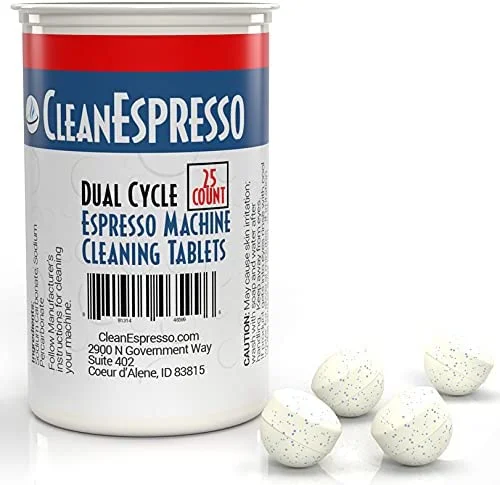
Descaling Tablets
The filter reduces scale buildup but doesn’t eliminate it. You still need to descale - just less often. Keep a pack on hand.
CLARIS Smart Plus vs Smart vs Blue
These three filters look similar but are not the same product.
| Feature | CLARIS Smart Plus | CLARIS Smart | CLARIS Blue |
|---|---|---|---|
| Compatible machines | Current Jura (E8, S8, Z10, ENA 4, J8, GIGA 6) | Older ENA Micro, some mid-2010s models | Impressa J, F, Z, E series |
| Capacity tracking | Digital chip - machine reads exact remaining capacity | No chip - timer-based tracking only | No chip |
| Filter media | Ion exchange resin + activated carbon | Ion exchange resin + activated carbon | Ion exchange resin + activated carbon |
| Capacity | 50 liters | 50 liters | 50 liters |
| Interchangeable | No | No | No |
The filter media inside all three is functionally similar. What differs is the housing shape and the presence/absence of the digital chip. Smart Plus is the current standard. Smart is effectively discontinued for new machines.
If you have a machine from 2018 or later, you almost certainly need Smart Plus. If you have an Impressa from 2015 or earlier, check the manual - it’s likely CLARIS Blue.
Running Without a Filter
You can run a Jura machine indefinitely without a filter. The machine doesn’t require one to operate. But the consequences vary by water hardness.
In soft water (under 7 dH): No meaningful downside. Scale forms slowly. Stick to the normal descaling schedule and the machine will be fine. Plenty of long-running Jura machines have never seen a CLARIS filter.
In medium water (7-14 dH): You’ll notice more frequent descaling prompts. Descaling every 4-6 weeks instead of every 2-3 months. Not a disaster, but annoying and adds chemical wear to internal components over time.
In hard water (14+ dH): Running without a filter long-term is a real risk to the machine. The boiler accumulates scale faster than descaling removes it if you’re not vigilant. Consistent hard water without filtration can lead to flow restrictor issues, pump strain, and boiler efficiency loss within a few years. See how long Jura machines last.
Bottom line: In soft water, skip the filter if you want to. In hard water, use it. The machine will run either way, but the filter buys you a longer service life and less descaling hassle where it matters.
Cost Analysis - Is It Worth It
A single CLARIS Smart Plus filter costs $10-15. A 3-pack runs $25-35 and covers most of the year at typical home use.
Annual filter cost at 6 replacement intervals per year: approximately $70-90.
What you get in return:
- Descaling frequency drops from every 4-8 weeks to every 3-5 months in hard water areas. That’s 6-12 fewer descaling cycles per year.
- Jura descaling tablets cost $10-15 per pack. Each avoided cycle saves one pack. At hard water frequency without a filter: 8-12 cycles/year = $80-120 in descaling tablets alone.
- The filter essentially pays for itself in saved descaling costs in hard water areas - and extends the descaling interval in all areas.
- Reduced chemical cycling means fewer wear cycles on valves and seals. This is harder to quantify but real over a 5-10 year ownership period.
In soft water: The cost-benefit is weaker. Fewer descaling cycles saved = less payback. Still useful, but “optional” is accurate.
One note on brand: Use official Jura CLARIS filters or well-reviewed third-party options like Urnex. Avoid unknown-brand “CLARIS compatible” filters from marketplace sellers. The ion exchange resin quality varies significantly, and a low-grade resin can leach compounds into your water. The official Jura filter has the strongest track record. For more on accessories and maintenance, see the Jura cleaning schedule and descaling guide. Choosing a new machine? Our Jura E8 review covers the model that includes the CLARIS Smart Plus slot as standard.
For Current Jura Machines
CLARIS Smart Plus - 3 Pack
A full year of coverage. Cheaper per filter than buying singles and one less thing to run out of.
Check Price →Still Needed
Jura Descaling Tablets
The filter extends the interval but descaling is still required. Keep these stocked so you’re not caught short.
Check Price →Thinking About a New Machine?
The Jura E8 - Our Top Pick for Home Use
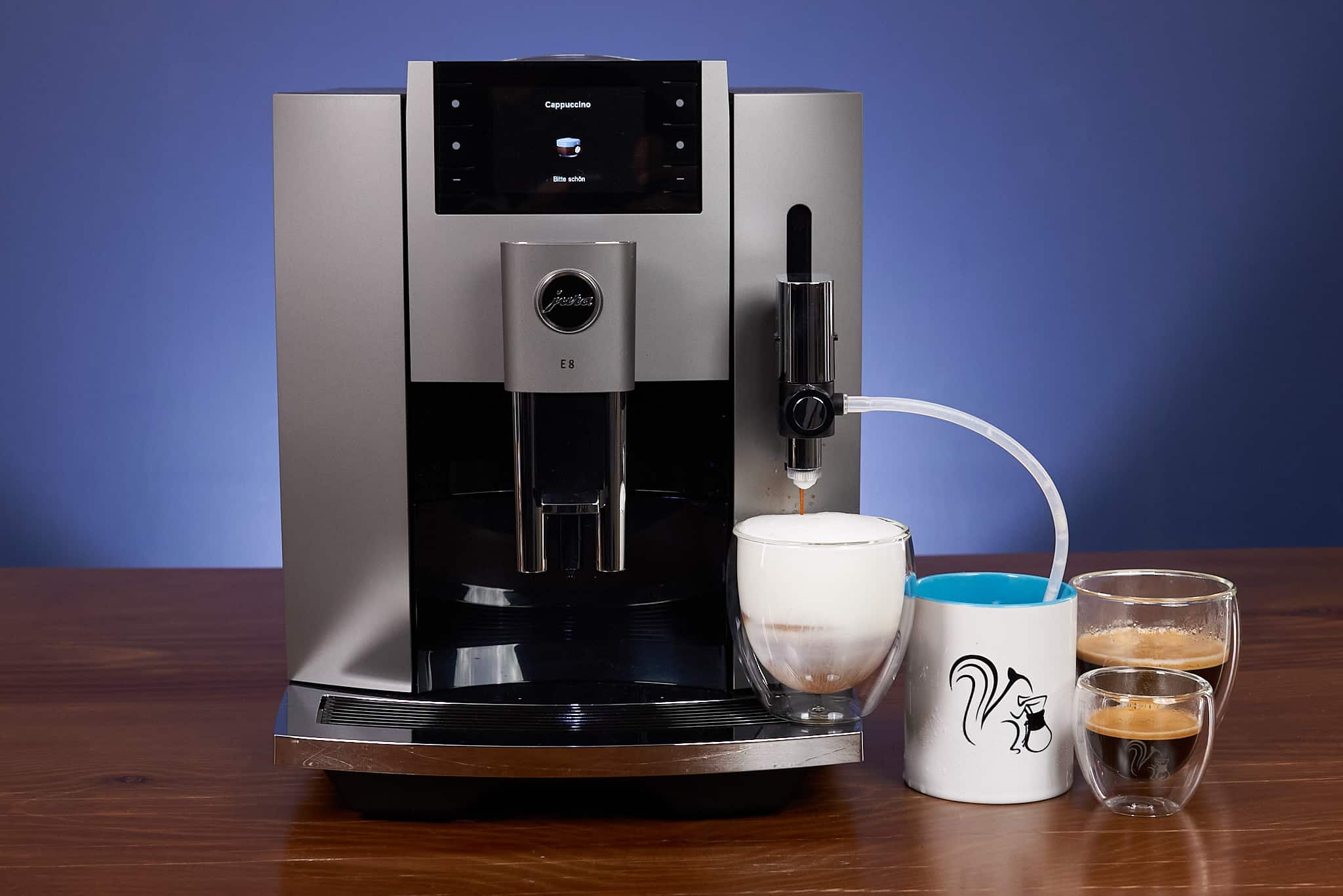
If you’re researching CLARIS filters, you’re probably already a Jura owner. If you’re still deciding on a machine, the E8 is where most home buyers land - it includes the Smart Plus filter slot and covers everything from espresso to flat whites.
Check E8 Price on Amazon →Related: Can you use Jura without a water filter? | Jura Switzerland guide (hard water) | Jura Scandinavia guide (hard water)
Disclosure: This site earns a commission on purchases made through affiliate links at no extra cost to you. Recommendations are based on product research and owner experience.