Quick Answer: Three settings control coffee strength on a Jura - the aroma/strength level (more = more grounds per brew), the volume (less water = more concentrated), and the grind size (finer = more extraction per gram). Change one at a time, brew 2-3 cups to evaluate, then adjust the next if needed. Changing all three simultaneously usually produces over-extracted, bitter coffee.
Best Bean for Bold Espresso
Lavazza Gran Selezione Dark Roast
A dark roast whole bean that extracts with more body and intensity than light or medium roasts at identical Jura settings. Blends well with milk drinks.
This Is Different From “Weak Watery Coffee”
Before adjusting settings, it helps to understand what kind of problem you are actually solving.
This guide is for coffee that works correctly but you prefer it bolder. The espresso brews fine, extraction looks normal, and the machine is clean - you just want a more intense result from the same machine.
The weak watery coffee guide is for a different problem - coffee that suddenly became weak, tastes flat or watery, or changed quality recently. That is usually a mechanical issue: scale buildup reducing brew temperature, a dirty brew group reducing extraction efficiency, or a grind setting that was accidentally changed. Fix the mechanical issue first. No amount of aroma setting adjustment compensates for a scaled-up machine.
If your coffee has always been on the lighter side and the machine is clean and descaled, then the dial-in adjustments below are exactly what you need.
The Three Levers, In Order of Impact
1. Aroma / Strength Setting (Highest Impact)
This is the setting that controls how much coffee the grinder doses into the brew group per drink. A higher aroma level means more grounds, which directly increases the strength and body of the espresso.
On the E8 and most current Jura models: go to Settings - Coffee - Aroma (sometimes labeled “Coffee Strength” or “Strength”). The scale typically runs from 1 to 8 or 1 to 10 depending on the model. Increase by 1 level, then brew 2-3 cups and evaluate before going further.
This is the first adjustment to make because it has the most direct effect on strength with the least risk of over-extraction.
2. Coffee Volume (Medium Impact)
Volume controls how much water flows through the grounds during brewing. Less water through the same amount of coffee produces a more concentrated shot.
On the E8: go to Settings - Coffee - Volume. Reduce by 10-15ml (0.3-0.5 oz) from your current setting. A standard espresso is around 40ml; dropping to 30ml with the same grounds weight significantly increases concentration.
This works best after you have already raised the aroma setting. Reducing volume without enough coffee in the brew group can cause over-extraction (bitter, harsh notes) rather than strength.
3. Grind Size (Smaller Incremental Impact, Higher Risk)
A finer grind increases the surface area of coffee particles exposed to water, which increases extraction - more dissolved compounds per gram of coffee, including the ones that create body and intensity.
To adjust: access the grinder dial through the machine’s side panel or menu (varies by model). Move one notch finer. Important: adjust the grind while the machine is actively grinding. Changing the grind setting on a stationary grinder can cause the burrs to bind. Wait for the next brew and adjust mid-cycle, or turn on the grinder first.
After each grind adjustment, discard the first 2-3 cups. The grinder takes a few cycles to fully transition to the new setting - the first cups will be a mix of old and new grind sizes and are not representative.
Grind Adjustment Reference
| Grind Direction | Effect on Cup | Best For | Risk |
|---|---|---|---|
| Much coarser (1-2 notches coarser than baseline) | Light body, sour or thin taste, pale crema | Under-extraction - not typically what you want | Sour, watery espresso |
| Slightly coarser (1 notch coarser than baseline) | Lighter, brighter, more acidic | Light roast beans, filter-style espresso | Low - safe to try |
| Current baseline (factory default) | Balanced extraction for medium roast | General purpose, medium roast beans | None |
| Slightly finer (1 notch finer than baseline) | More body, deeper color, denser crema | Dark roast beans, stronger espresso preference | Low - recommended first finer adjustment |
| Much finer (2+ notches finer than baseline) | Very intense, potentially bitter or harsh | Dark roast only, espresso-forward drinks | Medium-high - easy to over-extract |
Bean Selection for Stronger Coffee
The coffee you put in the hopper matters as much as the machine settings. Light and medium roasts extract differently from dark roasts at the same grind and aroma settings.
Dark roast beans produce more body and intensity from the same settings. The roasting process breaks down the bean’s cell structure, making compounds more soluble and extraction more efficient. Lavazza Gran Selezione and Peet’s Major Dickason’s Blend are two reliable dark roasts that work well in Jura machines.
Medium-dark roasts are a good middle ground - more intensity than medium roast without the heavier, sometimes ashy notes of very dark roasts. Most Italian-style espresso blends fall here.
Light roasts are designed for filter brewing and tend to produce lighter, more acidic espresso in a superautomatic machine, even at the finest grind setting. If you are using a light roast and want stronger espresso, switching to a medium-dark or dark roast is more effective than any settings adjustment.
Upgrade Your Machine
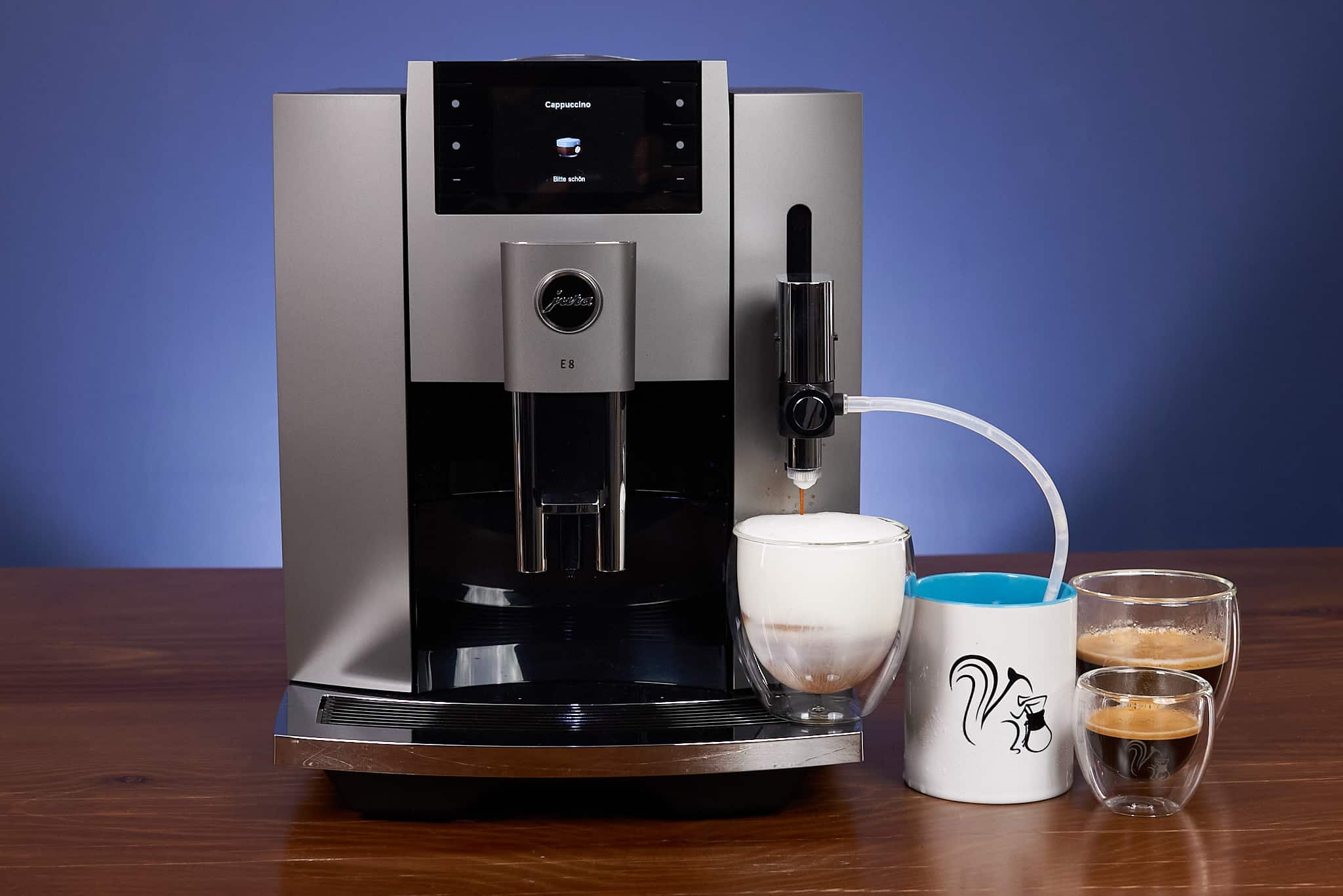
Jura E8 Automatic Espresso Machine
The E8 has one of the widest aroma adjustment ranges of any Jura model - 10 strength levels and a 10-step grinder give you precise control over every cup.
What to Do If Maximum Settings Are Still Not Strong Enough
If you have raised aroma to maximum, reduced volume to the minimum you find drinkable, and moved the grind to its finest setting - and the coffee still tastes weak or flat - the problem is almost certainly not the settings. At that point, check:
Brew group cleanliness: A dirty brew group coated in old coffee oil is one of the most common hidden causes of poor extraction. Coffee oils create a barrier that reduces how efficiently water moves through the grounds. If the machine has not been cleaned in the last 180-200 drinks, run a cleaning tablet cycle before adjusting anything else. See the cleaning guide for instructions.
Scale buildup: Scale on the heating element reduces brew temperature. Espresso brewed below optimal temperature (around 93C / 200F) under-extracts, producing thin, flat coffee regardless of grind or dose. If DESCALE is overdue or if the machine is making coffee noticeably cooler than before, run a descaling cycle first.
Bean freshness: Stale beans - even a dark roast - extract poorly. Coffee goes stale within 2-4 weeks of the roast date once opened. If the bag has been open for more than a month or does not have a roast date, fresh beans will do more for your cup than any settings change.
Full Machine Review
Jura E8 Review
See how the E8’s strength and grind settings compare to other Jura models, plus our full evaluation of extraction quality, ease of use, and value.
Read the E8 Review →As an Amazon Associate, we earn from qualifying purchases at no extra cost to you.