A Jura E8 and a Rancilio Silvia Pro X land within a few hundred dollars of each other, and that is where the similarity ends. One grinds, brews, and froths milk at the push of a button. The other hands you a bare 58 mm portafilter and expects you to bring the grinder, the technique, and the patience. If you are cross-shopping these two machines, you are not really comparing espresso makers - you are choosing between a hobby and a button.
This page gives you the honest version of that choice: a sourced spec table, and then the thing spec tables never show - a weekly active-time model that adds up what each machine actually asks of you, minute by minute, with every assumption stated so you can adjust it to your own routine.
The One-Button Side of This Comparison
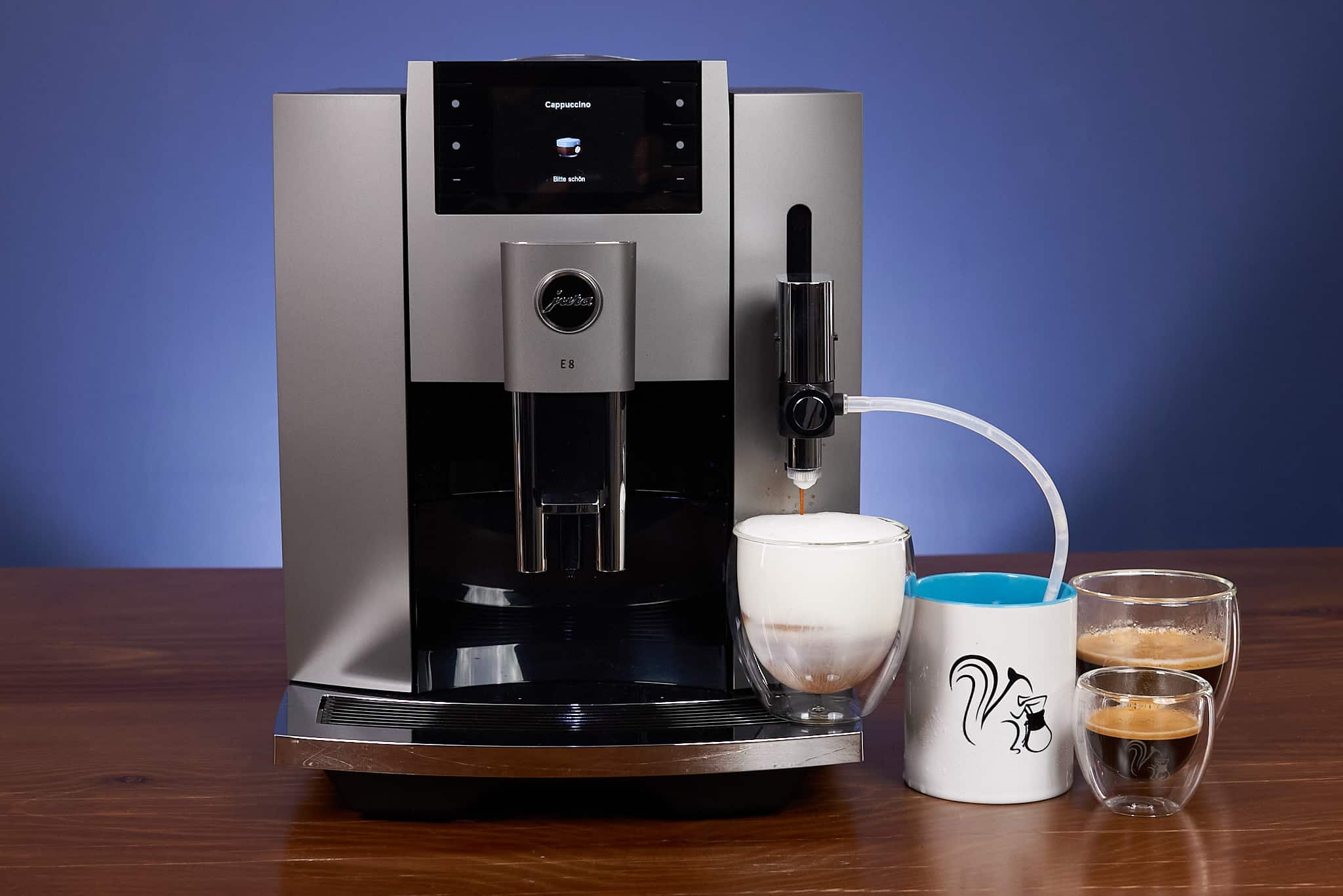
Jura E8 - Grinder, Espresso, and Milk in One Box
27 one-touch specialties in the current 5th-gen model, built-in grinder, HP3 milk system. No separate grinder to buy, no technique to learn.
Quick Answer
Buy the Silvia Pro X if pulling the shot is part of the pleasure: it has the higher quality ceiling, real control over every variable, and standard commercial parts you can service for decades - but it needs a separate grinder and roughly an hour more of your hands-on time every week. Buy the Jura E8 if you want excellent, identical drinks every day with about 15 minutes of weekly effort and zero learning curve. Run your own numbers in the time model below - for most households, that is the number that decides it.
Who Each Machine Is For
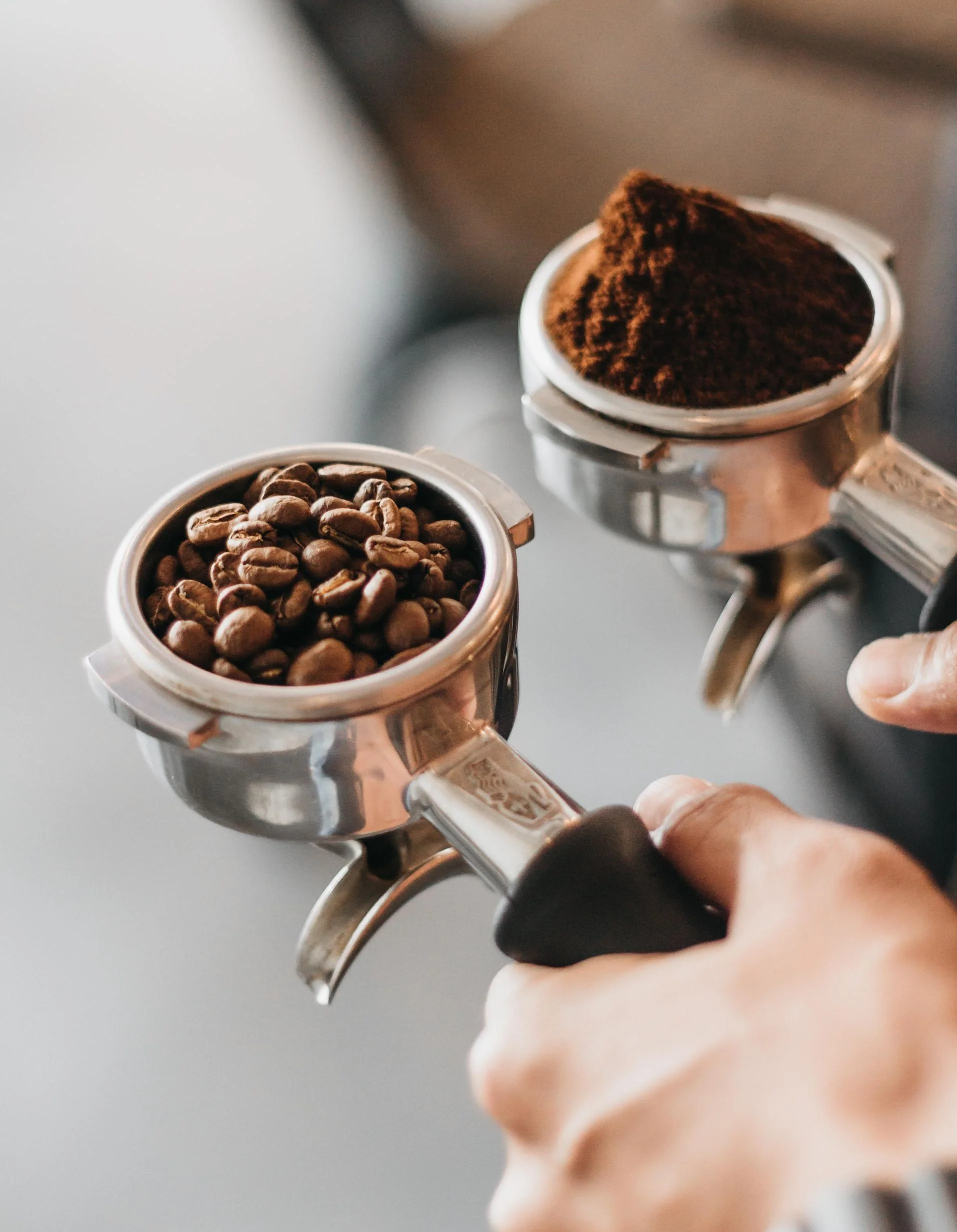
The Rancilio Silvia Pro X is a prosumer dual-boiler for someone who wants the craft. Rancilio builds commercial cafe machines, and the Pro X is the home machine that inherits that DNA: a 0.3-liter brew boiler and a separate 1-liter steam boiler, each with its own PID temperature controller, feeding a commercial-style 58 mm portafilter. Nothing is automated. You grind (on a grinder you buy separately), dose, tamp, pull the shot while watching the pressure gauge, and steam milk on a wand. Every one of those steps is a variable you control - and a step you can get wrong.
The Jura E8 is a super-automatic for someone who wants the result. Press a button and the machine grinds fresh beans, tamps, brews with Jura’s Pulse Extraction Process, and - for milk drinks - draws and froths milk through its HP3 system, all in one sequence. The current 5th-generation model makes 27 specialties one-touch. There is no technique to acquire and almost nothing to get wrong. Our full E8 review covers it in depth.
The same fork in the road exists at the entry-level price band - see Jura E8 vs Breville Barista Express - but at the $2,000 level the manual side stops being a compromise. The Silvia Pro X is not a starter machine you will outgrow. That changes the calculus, and it is why this comparison deserves its own page.
Spec Table: What You Get for Roughly the Same Money
Prices below are approximate street prices at the time of checking and move often - use the price links for current figures. Sources for every figure are listed at the end of this article.
| Spec | Jura E8 | Rancilio Silvia Pro X |
|---|---|---|
| Type | Super-automatic (bean to cup) | Semi-automatic prosumer dual-boiler |
| Approx. price | ~$1,399-$1,599 | ~$2,195 |
| Grinder | Built in (Professional Aroma Grinder, P.A.G.2) | None - separate grinder required |
| Heating | Thermoblock | Dual boiler: 0.3 L brew + 1 L steam, dual PID with digital display |
| Brew group | Internal, automatic dosing and tamping | 58 mm portafilter, chrome-plated brass, 8/16 g baskets |
| Milk | HP3 one-touch milk system (cappuccino, latte macchiato, flat white and more) | Manual steam wand fed by dedicated 1 L steam boiler |
| Extraction control | Preset programs: strength, volume, temperature adjustments | Full manual: adjustable soft pre-infusion (0-6 s), shot timer, brew pressure gauge |
| Water tank | 1.9 L (64 oz) | 2 L |
| Bean hopper | 280 g (9.9 oz) | n/a (no grinder) |
| Dimensions (W x H x D) | 11 x 13.8 x 17.6 in | 9.8 x 15.3 x 16.5 in (plus grinder alongside) |
| Weight | 22.1 lb (10 kg) | 44.1 lb (20 kg) |
| Power | 1450 W (120 V) | 950-1000 W (120 V) |
Two notes on reading that table honestly. First, the Silvia Pro X price does not include a grinder, and a machine of this class deserves a good one - the true setup cost runs meaningfully higher than the sticker. Our companion page on the Jura E8 vs Profitec MOVE breaks down full machine-plus-grinder setup costs for this category, so we will not repeat that math here. Second, the Silvia Pro X at twice the E8’s weight is nearly all metal and thermal mass - that is a feature, not padding. It is also why Rancilio fits a power-on timer: dual boilers take real time to come fully up to temperature, so owners typically schedule the machine to be hot before they wake up.
The Weekly Active-Time Model
Specs do not decide this comparison. Time does. Every drink from the Silvia Pro X is a short manual procedure: grind and dose, level and tamp, lock in, pull the shot while watching it, steam the milk, then purge the wand, knock the puck, and rinse the portafilter. Every drink from the E8 is a button press plus a share of occasional refills and rinses.
Those per-drink minutes are small. Multiplied across a normal week, they become the single biggest practical difference between these machines. Here is our model - these are our own estimates, stated in full, and you can edit every number.
Our assumptions: you are a practiced home barista, not a beginner; both machines are warm when you start (the Silvia Pro X on its power-on timer, the E8 waking on its own), so heat-up is not counted; a milk drink means a cappuccino or latte with steamed or frothed milk; dialing in means the grind-adjustment session a manual workflow needs each time you open a new bag of beans. These figures line up with the category-wide model in our super-automatic vs semi-automatic guide - this version just makes it specific to these two machines and lets you change the inputs.
Interactive Tool
Your Weekly Hands-On Time: E8 vs Silvia Pro X
Your Habit
Our Estimates (edit if yours differ)
| Hands-On Time | Silvia Pro X | Jura E8 |
|---|---|---|
| Drinks per week | ||
| Weekly cleaning | ~10 min (backflush, wand soak, group brush) | ~5 min (tray wipe, prompted rinse cycles) |
| Dial-in time per week | ~0 (grind setting rarely changes) | |
| Total per week | ||
| Difference | ||
How the math works (no black box)
- Silvia Pro X per week = espresso drinks/day x 7 x manual espresso minutes + milk drinks/day x 7 x manual milk-drink minutes + 10 minutes weekly cleaning + dial-in time.
- Dial-in time per week = bags/month x 15 minutes per dial-in session, divided by 4.33 weeks per month. 15 minutes per new bag is our estimate for a practiced user; beginners often need more.
- Jura E8 per week = total drinks/day x 7 x E8 minutes per drink + 5 minutes weekly cleaning. The per-drink figure amortizes water refills, bean top-ups, grounds emptying, and milk-circuit rinses.
- Hours per year = weekly difference x 52 / 60.
- All per-drink and cleaning figures are our own estimates, consistent with the model in our super-automatic vs semi-automatic guide. Heat-up time is excluded for both machines. Deep-maintenance events (descaling, gasket changes) are excluded on both sides.
With the default inputs - one espresso and one milk drink a day, one new bag a month - the model lands at roughly 75 minutes per week for the Silvia Pro X against roughly 15 for the E8. Call it an hour a week, 50+ hours a year. If that hour is your favorite part of the day, the Silvia Pro X is the right machine and no spec sheet will talk you out of it. If it is a chore between you and your cappuccino, the E8 just gave you more than a full work-week a year back.
If 15 Minutes a Week Sounds Better Than 75
The E8 Is the Time-Model Winner
Grinding, tamping, steaming, and rinsing all happen inside the box. You press a button.
Skill Curve and Failure Modes
What the spec sheets tell us here is more useful than any anecdote.
On the Silvia Pro X, the hardware removes exactly one classic failure mode: temperature. Dual PID controllers hold the brew and steam boilers at set temperatures, so the “temperature surfing” that defines the original single-boiler Silvia is gone. Everything else remains yours to control, which means yours to get wrong. The failure modes owners commonly report with any manual dual-boiler are inherent to the workflow, not defects: grind set too fine chokes the shot, too coarse gushes it; inconsistent dosing swings extraction shot to shot; an unlevel tamp channels water through part of the puck. Rancilio’s adjustable soft pre-infusion (0 to 6 seconds), shot timer, and brew pressure gauge exist precisely because the machine expects you to be diagnosing your own shots. Expect a learning period measured in weeks, and expect the first bag or two of beans to be partly sacrificed to it.
On the E8, the failure modes are nearly all maintenance-shaped rather than skill-shaped. The machine doses, grinds, tamps, and extracts the same way every time; what owners commonly report going wrong is neglect - skipped cleaning cycles, hard water without a filter, milk circuit hygiene - not bad shots from bad technique. The tradeoff is the flip side of automation: when a super-automatic does eventually need major service, it is a sealed appliance with electronics and a fixed internal brew group, which usually means a repair center visit rather than a home fix.
Milk Workflow: Steam Wand vs One-Touch
This is the sharpest daily-life difference after the time model.
Silvia Pro X: the dedicated 1-liter steam boiler means strong, dry steam is available on demand, alongside an independent hot water tap. In practiced hands, a proper wand produces true microfoam - the glossy, paint-like texture that makes latte art possible and that no automatic frother fully matches. That is the ceiling. The floor is that steaming is a genuine skill: stretching, incorporating, temperature by feel or thermometer, then purging and wiping the wand every single time. Nobody pours cafe-quality microfoam in their first week.
Jura E8: drop the milk tube into cold milk, press the button, and the HP3 system grinds, brews, and layers the milk drink in one sequence - cappuccino, flat white, latte macchiato, and the rest of the 27-specialty menu on the current model. The texture is very good and, more importantly, identical every time, from any member of the household, including guests. The honest cost is a cleaning discipline: the milk circuit needs its short rinse after milk drinks and a periodic deep clean with Jura’s milk system cleaner, and skipping that is not optional from a hygiene standpoint.
If one person in your home is excited to learn steaming, the wand is a genuine upgrade. If three people just want lattes before school, the wand is a bottleneck.
Where the Silvia Pro X Wins
Being honest about this is the point of the page, so concretely:
- Quality ceiling. With a capable grinder and a practiced hand, a 58 mm dual-boiler with PID temperature control and adjustable pre-infusion can produce espresso beyond what any super-automatic - the E8 included - can extract. Dose weight, grind, tamp, ratio, and time are all yours to optimize per bean. The E8’s presets are excellent and consistent, but they are presets.
- Real control. A pressure gauge, a shot timer, per-boiler PID temperatures, and 0-6 second pre-infusion are instruments, not conveniences. If you want to taste the difference one degree or one second makes, only one of these machines lets you.
- Simultaneous brewing and steaming. Two boilers mean you pull the shot and steam the milk at the same time, cafe-style. The E8 sequences everything automatically, which is effortless but not faster for a single practiced user making one drink.
- Standard 58 mm serviceability. The Pro X uses the commercial 58 mm standard, so baskets, gaskets, screens, and tampers are ubiquitous and cheap, and routine service is owner-doable with basic tools. A machine like this can be maintained more or less indefinitely - a genuinely different ownership model from a sealed super-automatic.
- Upgrade path. Better baskets, bottomless portafilters, better grinders - the Pro X rewards every accessory upgrade you throw at it over the years. The E8 on day one is the E8 in year five, which is either a limitation or exactly the point, depending on who you are.
Where the Jura E8 Wins
- Time. Roughly an hour a week returned, every week, per the model above. This is the E8’s core argument and it never stops applying.
- No grinder to buy. The E8’s price includes the grinder; the Silvia Pro X’s does not, and a worthy grinder adds several hundred dollars. See our Profitec MOVE comparison for the full setup-cost accounting in this category.
- Zero skill floor. Every person in the house makes an identical drink on day one. There is no learning curve, no sacrificial bags of beans, no bad-shot mornings.
- Milk drinks at one touch. For multi-latte households, this is the difference between a button press per person and a steaming session per person.
- Consistency. The same drink, every time, indefinitely. A super-automatic ignores your mood, your hurry, and your technique - which is precisely what most people want at 6:30 am.
- Footprint as one box. At 11 inches wide the E8 is a single appliance. The Silvia Pro X is narrower on paper, but it never lives alone: add the grinder, a knock box, a scale, and a tamping area, and the manual setup claims most of a counter section.
- Sticker price. At roughly $1,399-$1,599 against roughly $2,195 before a grinder, the E8 setup is meaningfully cheaper in practice - unusual, given that “convenience machine” usually means paying a premium. If you are still weighing whether any machine at this level makes financial sense, our is Jura worth the price breakdown runs that math.
The Verdict
The Silvia Pro X is the better espresso machine in the narrow sense: higher ceiling, total control, decades-serviceable hardware. The E8 is the better appliance in the broad sense: near-equal money buys you back an hour a week, includes the grinder, and makes every drink for every person identically well with no skill at all.
So ignore the brand debate and answer one question: do you want a hobby or a button? If the 75 minutes a week is the appeal, buy the Rancilio and enjoy every one of them. If you read the time model and felt relief at “15 minutes,” you already know.
FAQ
Is the Rancilio Silvia Pro X better than the Jura E8?
For espresso quality ceiling, yes - a dual-boiler with a 58 mm portafilter, dual PID, and a good separate grinder can produce shots a super-automatic cannot match. For consistency, speed, milk-drink convenience, and total setup cost, the E8 is better. They are opposite answers to the same budget; the deciding factor is how much hands-on time you want your coffee to take.
Do I need a separate grinder with the Silvia Pro X?
Yes. There is no built-in grinder, and a machine of this class needs a quality burr grinder to perform as designed - typically several hundred dollars on top of the machine. The E8’s grinder is built in.
Which is better for lattes and cappuccinos?
The Silvia Pro X has the higher texture ceiling: its dedicated 1-liter steam boiler drives a commercial-style wand that, with practice, produces true microfoam. The E8 makes milk drinks with one button and zero technique through its HP3 system. Households making several milk drinks a day almost always live better with the E8.
How much more time does the manual machine really take?
Using our estimates, a two-drink-a-day household spends roughly 75 minutes a week hands-on with the Silvia Pro X workflow versus roughly 15 with the E8 - 50+ hours a year. The calculator above lets you rerun that with your own numbers.
Which machine lasts longer?
Differently, not simply longer. The Silvia Pro X is built on standard commercial parts and is owner-serviceable more or less indefinitely. Jura machines commonly serve 8-10 years with proper care, but major repairs go to a service center. If rebuildability matters to you, that is a genuine Silvia Pro X advantage.
Is there a middle ground between these two?
Not really within one machine - automation is mostly binary at this level. The closest compromises are a cheaper manual setup (see our E8 vs Breville Barista Express comparison) or accepting the E8’s presets and spending the saved money on better beans. If adjustability itself is what you are after, our Jura E8 vs Lelit Bianca V3 comparison maps exactly what a flow-profiling paddle and dual PID let you control that the Silvia Pro X does not expose. Our super-automatic vs semi-automatic guide maps the whole spectrum, and our full competitor comparison guide covers how Jura stacks up against other brands.
Decided on the Button?
Jura E8 - The Machine the Time Model Keeps Recommending
Built-in grinder, 27 one-touch specialties, HP3 milk system, and about 15 minutes of your week. Prices move often - check the current one.
Check E8 Price on Amazon →All prices are approximate street prices that change frequently - use the price buttons on this page for current figures. The weekly active-time model (per-drink minutes, cleaning minutes, 15-minute dial-in sessions) is built entirely on our own estimates, stated in full in the calculator’s formula box, not on manufacturer claims. Neither manufacturer publishes hands-on time figures. Specifications last checked: July 2026.
15 Minutes a Week
Jura E8
Grinder and milk system built in, no learning curve.
Check E8 Price on Amazon →The Higher Ceiling
Rancilio Silvia Pro X
Dual boiler, dual PID, commercial 58 mm group - bring your own grinder.
Check Price on Amazon →As an Amazon Associate, we earn from qualifying purchases at no extra cost to you.