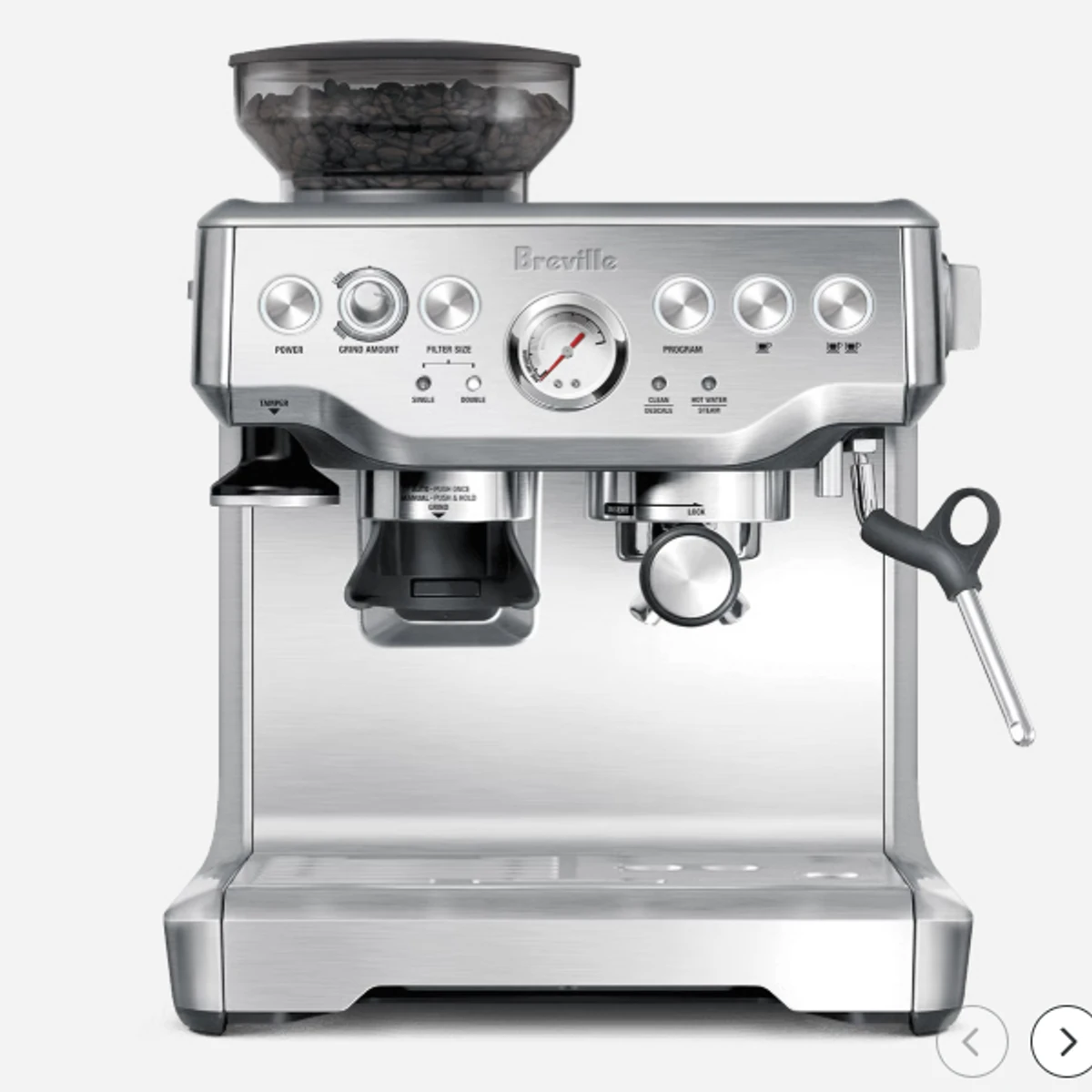
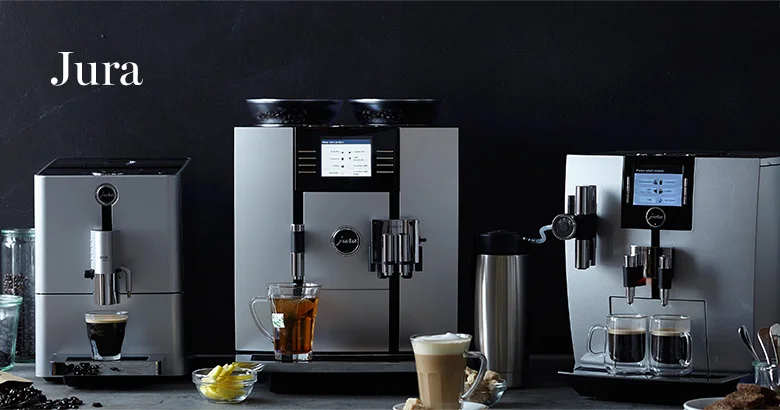
The Jura ENA 4 sits at the bottom of Jura’s lineup in price, but it does not feel like a budget machine. At around $699-$799 on Amazon, it is the most affordable way into the Jura ecosystem - and for the right buyer, it is the right machine. For the wrong buyer, it will feel like a compromise every morning.
This review will tell you which one you are.
Jura ENA 4
Jura quality at the lowest entry price
7 one-touch programs, compact 10” width, OneTouch milk - the essential Jura experience without the E8 price tag.
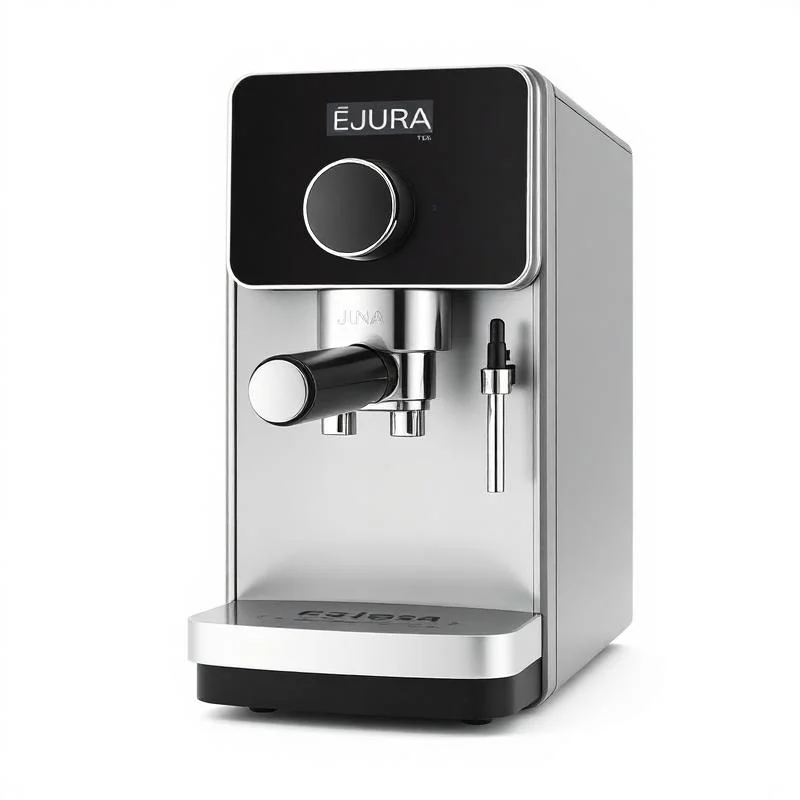
Quick Answer
The Jura ENA 4 is the best entry-level Jura available in 2026. It makes genuinely good espresso thanks to a ceramic disc grinder, handles 7 one-touch drink programs including milk drinks, and fits in tight kitchen spaces at just 10 inches wide. Recommend it for single-person households or couples who drink mostly espresso and the occasional cappuccino and want Jura’s build quality and maintenance system without spending $1,400 on the E8.
Specs at a Glance
| Spec | Jura ENA 4 |
|---|---|
| Price (Amazon) | $699 - $799 |
| Grinder | E-type ceramic disc, 5 settings |
| Drink programs | 7 (espresso, coffee, cappuccino, latte macchiato, flat white, macchiato, hot water) |
| Milk system | OneTouch (integrated, automatic) |
| Display | 2.8” TFT color display |
| Water tank | 1.1 L |
| Bean hopper | 125 g |
| Width | 10” (25.4 cm) |
| Weight | ~18 lbs (8.1 kg) |
| Warranty | 2 years (USA) |
Who Should Buy the ENA 4 - and Who Should Skip It
Buy the ENA 4 if…
You want Jura quality at entry price
Counter space is tight, budget is closer to $700 than $1,400, you mainly drink espresso and occasional milk drinks, and you want automatic maintenance prompts without the complexity of higher-tier models.
Check ENA 4 Price →Skip to the E8 if…
Milk drinks are central to your routine
You drink flat whites or lattes daily, want the G3 grinder’s precision, need 17 drink programs, or have a two-person household that goes through 4+ drinks per morning and needs a larger 1.9L water tank.
See E8 Review →Features Deep-Dive
The E-Type Grinder
The ENA 4 uses Jura’s E-type ceramic disc grinder - not the G3 that you get on the E8 and S8. This is the main technical difference most reviewers gloss over, so it is worth being direct about what it means.
The E-type grinder is ceramic (a genuine advantage over steel at this price - ceramic runs cooler and does not impart metallic notes), but it has 5 grind settings compared to the G3’s more refined adjustment range. In practice, the difference shows up in two ways: you have less room to dial in a specific roast profile, and the default grind size may not be ideal for very light or very dark roasts without some experimentation.
For medium roast beans - which is what most people buy and what Jura machines are calibrated for - the E-type grinder produces clean, consistent espresso with solid crema. It is not the G3, but it is a good grinder at this price point. For context, most competitors at $600-700 use steel burr grinders with less favorable thermal properties.
If you want maximum grind precision and drink very light or very dark roasts, the G3 on the E8 is the better choice. For mainstream medium-roast espresso, the E-type performs well enough that most people will not notice the difference.
See the best coffee beans for Jura machines for specific bean recommendations that work well with the ENA 4’s grind settings.
Milk System
The ENA 4 has a OneTouch milk system - it handles milk frothing automatically as part of the drink program. You connect a milk container and the machine draws milk, froths it, and dispenses your cappuccino or latte macchiato in one sequence without you manually positioning a steam wand.
The honest caveat: the milk quality is not the same as the HP3 fine-foam system on the E8. The ENA 4 produces a functional, drinkable foam - cappuccinos come out with visible froth that tastes right. But the texture is coarser than what the HP3 produces. If you have had a flat white from a well-dialed espresso bar and expect that dense, pourable microfoam at home, the ENA 4 will not match it.
For someone who drinks cappuccino two or three times a week as an occasional treat, this is a non-issue. For someone who has two flat whites every morning, this is a daily frustration. Be honest with yourself before buying.
Drink Programs
Seven programs covers most of what people actually drink: espresso, coffee (longer pull), cappuccino, latte macchiato, flat white, macchiato, and hot water for tea. The flat white and macchiato programs are a step up from what older Jura entry-level machines offered - earlier ENA models had 4-6 programs and did not include flat white.
What is missing relative to the E8: ristretto, lungo, milk foam standalone, espresso doppio, café barista, café bonbon, and several other specialty options. If you experiment with different coffee styles frequently, the E8’s 17 programs give you more room. If you know what you drink every morning and it fits within those 7, you are not missing anything meaningful.
Volume and strength are adjustable on all programs - you can set your preferred espresso volume and coffee strength and the machine remembers your settings.
Display and Interface
The 2.8” TFT color display uses the same plain-text menu system as all current Jura machines. It is genuinely easy to use. Menus are in plain English (or your selected language), maintenance prompts are clear and actionable, and the daily workflow is: press the drink button, wait 45-55 seconds, drink your coffee.
There is no touchscreen - you navigate with two side buttons. That is fine for a machine with 7 programs. On the Z10 with its full touchscreen, the navigation feels more premium. On the ENA 4, the button-based interface works well given the limited program count.
Energy Save Mode
The ENA 4 has an energy save mode that drops power consumption significantly between uses. For a machine left on a countertop all day, this matters - Jura machines warm up from energy save faster than from a cold start, so leaving it in energy save mode is the practical way to use it. The machine is ready to brew from energy save in about 20-25 seconds.
You can configure the auto-off time in the settings. For most households, setting it to turn off after 2-3 hours of inactivity works well.
Maintenance
The ENA 4 runs the same automated maintenance system as every Jura machine. It prompts you when action is needed - you are not tracking this yourself.
- Cleaning cycle: every 200 cups, uses Jura cleaning tablets, takes about 10 minutes
- Descaling: triggered automatically based on a water hardness setting you configure at setup, typically every 2-3 months
- Milk system rinse: prompted after every milk drink session, runs automatically in about 15 seconds
- Water filter: Jura CLARIS Smart filter, replace every 50 liters
Annual consumable cost runs $80-100 for cleaning tablets, descaling tablets, and CLARIS filters - the same across all Jura models. The Jura cleaning guide covers the full maintenance workflow in detail.
The 1.1L water tank is rear-accessible. In a tight kitchen setup where the machine is against a wall, you pull it forward slightly to remove the tank. It is a minor inconvenience but worth knowing if your machine will be in a tight spot.
Ready to buy?
Jura ENA 4 - current pricing on Amazon
Check if the ENA 4 is in stock and see the current price. Prices shift a few times per year and Amazon occasionally discounts it.
ENA 4 vs E8: When to Spend More
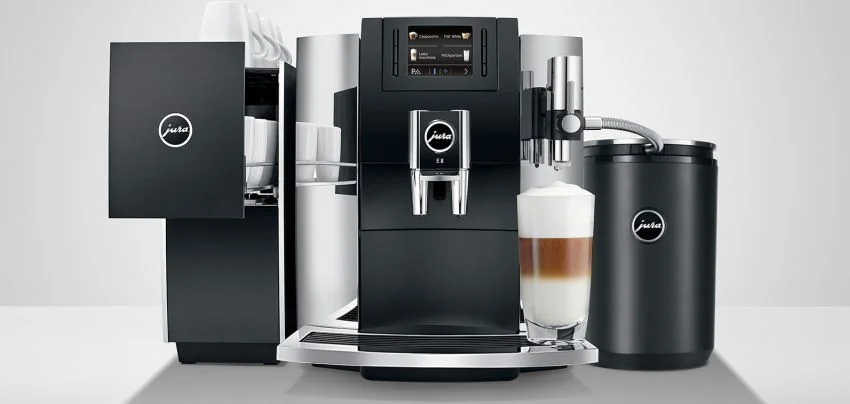
The E8 costs roughly $600 more than the ENA 4. Whether that gap is justified depends almost entirely on how you use your machine.
| Feature | ENA 4 | E8 |
|---|---|---|
| Price | ~$699-$799 | ~$1,349-$1,499 |
| Grinder | E-type ceramic, 5 settings | G3 ceramic, more refined adjustment |
| Drink programs | 7 | 17 |
| Milk system | OneTouch | HP3 fine-foam |
| P.E.P. extraction | No | Yes |
| Water tank | 1.1 L | 1.9 L |
| Bean hopper | 125 g | 280 g |
| Display | 2.8” TFT | 2.8” TFT |
The G3 grinder gives the E8 an edge on precision - particularly for light roasts and very short espresso pulls where extraction timing and grind consistency matter most. The E8 also has Pulse Extraction Process (P.E.P.) which optimizes extraction for short drinks by pulsing water through the grounds rather than a continuous flow. For a standard 40ml espresso, the difference is subtle. For a 25ml ristretto, it is more noticeable.
The HP3 fine-foam milk system is where the E8 earns its price for milk drink drinkers. The texture difference is real and daily. The 1.9L water tank is also a meaningful quality-of-life upgrade for a two-person household - you go from refilling daily to every two or three days.
Choose the ENA 4 if: you mostly drink espresso and black coffee, milk drinks are a few times a week rather than daily, or budget and counter space are genuine constraints.
Choose the E8 if: you drink flat whites or lattes every morning, you have two people using the machine daily, or you want the maximum flexibility in drink options and grind adjustment. Read the full Jura E8 review for a deeper comparison.
Compare your options
See the E8 before deciding
The E8 costs more but delivers meaningfully better milk quality and grind precision. Worth checking the price gap before committing.
Who Should Skip the ENA 4
Skip the ENA 4 and buy the E8 if: You make milk drinks (cappuccinos, lattes, flat whites) daily. The ENA 4’s basic milk system produces decent foam but nothing close to the E8’s HP3 fine-foam. If you drink two milk-based drinks per day, the E8 is worth the premium.
Skip the ENA 4 and buy the DeLonghi Rivelia if: You want integrated milk frothing in a compact machine without a separate add-on purchase. The Rivelia has a built-in milk carafe system at a similar combined price point and a removable brew group for easy home cleaning. See our ENA 4 vs DeLonghi Rivelia comparison.
Skip the ENA 4 and buy the Magnifica Evo ($500-600) if: You are genuinely uncertain whether a super-automatic suits your lifestyle. Try DeLonghi’s cheaper option first. If you love it, the ENA 4 will be a clear step up whenever you upgrade.
The ENA 4 is right if: Counter space is genuinely tight (4.4 inches wide - nothing else competes), you primarily drink espresso and lungo, you want Jura’s reliability record and 2-year warranty, and you are committed to the super-automatic format.
ENA 4 vs DeLonghi Magnifica Evo: Why Jura Wins on Reliability
The DeLonghi Magnifica Evo is the most common alternative buyers consider at this price range - it runs $500-600 and covers similar ground in terms of automatic espresso and basic milk frothing.
The Magnifica Evo is a reasonable machine and genuinely competitive on price. Where Jura has the edge:
Build quality and longevity. Jura machines are built in Switzerland with tighter tolerances. Long-term reliability data consistently shows Jura outlasting DeLonghi super-automatics by several years with proper maintenance. The ceramic grinder in the ENA 4 is more durable than the steel burrs in comparably priced DeLonghi models.
Maintenance system. Jura’s automated prompt system is significantly better than DeLonghi’s. The machine tells you exactly what to do and when, runs the cleaning cycles automatically, and the process is genuinely low-effort. DeLonghi maintenance is more manual and easier to neglect.
Drink quality consistency. Jura machines produce more consistent results cup to cup. DeLonghi machines have more variance in extraction - a fresh bag of beans often requires re-dialing. The ENA 4 is more forgiving.
The honest counter-argument for DeLonghi: if you are genuinely uncertain whether a super-automatic fits your lifestyle, the lower price of the Magnifica Evo is a lower-risk entry. If you try it and decide you want better, you have not spent $700. If you are confident a super-automatic is what you want and you plan to own it for 5+ years, Jura’s reliability record makes the ENA 4 the better value over the machine’s full lifespan.
Also see the ENA 4 vs ENA 8 comparison if you are considering stepping up within the ENA line.
Real-World Ownership Notes
Bean choice matters. The ENA 4’s E-type grinder is calibrated for medium roast beans. Jura recommends espresso roast whole beans - pre-ground coffee bypasses the grinder entirely and produces noticeably worse results. See the best coffee beans for Jura machines for specific recommendations. Lavazza Super Crema is a consistent performer in ENA 4 machines.
Recommended beans
Lavazza Super Crema - works well in ENA 4
Medium roast, smooth crema, and low acidity. One of the most reliable options for the ENA 4’s E-type grinder.
Water filter is worth it. Using a CLARIS filter reduces mineral buildup and extends the time between descaling cycles. In hard water areas, the difference is significant - without a filter you may need to descale every 6-8 weeks. With a filter in medium-hard water, every 3-4 months is more typical. The filter also noticeably improves taste clarity in soft-tasting tap water.
The 1.1L tank in a two-person household. Two people drinking 2 drinks each in the morning will empty about half the tank. You will refill daily if the machine is the household’s primary coffee source. It is a 30-second task, not a real burden - but it is worth knowing before you buy if you are used to filling a 1.9L tank every few days.
Grind setting adjustment. Start at the middle grind setting (3 of 5) and adjust based on results. If your espresso comes out thin and fast, go finer. If it comes out slow and bitter, go coarser. The ceramic grinder produces consistent results once set - you should not need to adjust frequently unless you switch bean types.
Pros and Cons
| Pros | Cons |
|---|---|
| Compact 10” width - fits tight spaces | E-type grinder less precise than G3 on E8 |
| 7 one-touch programs including flat white | Smaller 1.1L water tank - frequent refills for 2+ people |
| Ceramic disc grinder - durable, no metallic notes | Milk foam quality below E8’s HP3 system |
| OneTouch milk - fully automatic, no steam wand | No P.E.P. extraction for short pulls |
| Full Jura maintenance system with automated prompts | 125g hopper is small for high-volume households |
| 2-year warranty, strong long-term reliability | Fewer grind adjustment steps than G3 |
| Lower price than any other Jura with milk capability | Not ideal for light roast enthusiasts |
FAQ
Is the Jura ENA 4 good for beginners?
Yes. The ENA 4 has one of the simplest interfaces in Jura’s lineup - minimal menus, automated maintenance prompts, one-touch drinks. Ideal for first-time super-automatic owners.
What is the difference between ENA 4 and E6?
The E6 costs $300-400 more and adds HP2 fine foam milk technology, 11 specialties vs 8, and a color TFT display. If you make milk drinks daily and want better foam, step up to the E6. See our ENA 4 vs D6 comparison and E6 review.
Final Verdict
The Jura ENA 4 is an honest machine. It is compact, reliable, easy to use, and makes good espresso - not great espresso in the way the E8 does with its G3 grinder and P.E.P. extraction, but good espresso that most people will be genuinely happy with every morning.
The case for buying it is straightforward: if you want Jura’s build quality, the automated maintenance system, and the confidence that your machine will still be running well in 5-7 years, the ENA 4 is the cheapest way in. At $699-$799, it saves you $600 compared to the E8 and delivers about 80% of the experience.
The case against: if milk drinks are a daily habit, the OneTouch system produces functional but not exceptional foam. And if you drink 4+ coffees a day across a two-person household, the 1.1L tank will become a mild daily nuisance.
Buy it if you drink mainly espresso, have limited counter space, or want to enter the Jura ecosystem without committing $1,400. Skip it (and buy the E8) if milk quality matters to you on a daily basis.
Considering the newer Jura C3 instead? It’s officially the ENA 4’s 2026 successor, but at $1,199 with only 2 drink options and no milk system, it costs more while doing less - the ENA 4 remains the better buy for most people.
Best Entry Value
Jura ENA 4
$700-$900. 8 specialties, optional milk add-on, narrowest Jura footprint.
Check Price →If Milk Drinks Are Daily
Jura E8
$1,399. 27 specialties (5th-gen), full HP3 fine-foam milk system.
Check Price →Jura’s Newer Compact
Jura C3
$1,199. Coffee-only, no milk - costs more than the ENA 4 with fewer drinks.
Check Price →As an Amazon Associate, we earn from qualifying purchases at no extra cost to you.