If you are choosing between a Nespresso and a Jura, you are really making a decision about what kind of coffee drinker you are. Both make excellent coffee by their own standards. The question is which standard fits your life.
Best Entry-Level Jura
Jura ENA 4 - Start Here if Upgrading from Nespresso
Ceramic grinder, Swiss-built, 8 specialty drinks. The lowest price of entry into real bean-to-cup espresso.
Quick Answer
Nespresso wins on upfront cost and zero-effort convenience. Jura wins on espresso quality, customization, and long-term cost. At two cups per day, a Jura ENA 4 pays for itself versus Nespresso OriginalLine pods in roughly 2.5 years - and an E8 in about 3.5 years. Most coffee enthusiasts who make the switch to Jura do not go back.
The Core Difference: Fresh Beans vs Pre-Ground Pods
This is not a minor distinction. It is the entire argument for Jura.
Every time a Jura machine brews, it grinds whole beans fresh. The grinding happens seconds before the water touches the coffee. That freshness matters because coffee begins losing volatile aromatic compounds the moment it is ground. The oils that create crema, the CO2 that creates pressure and body - both degrade rapidly once coffee is ground and exposed to air.
Nespresso capsules contain pre-ground coffee that was ground and sealed weeks or months before you use it. The vacuum seal slows oxidation significantly, and Nespresso’s engineering is genuinely impressive - the pressure system in VertuoLine machines in particular produces a credible result. But pre-ground is pre-ground. The ceiling for what a capsule machine can produce is lower than what a machine grinding fresh beans can produce, regardless of engineering.
The crema you get from a Jura is thicker, longer-lasting, and more aromatic than what Nespresso produces. Espresso from a Jura holds at temperature longer. And because Jura lets you adjust the grind, the strength, the volume, and the brew temperature, you can dial in to your beans and your taste. Nespresso gives you no adjustments at all - what the capsule contains is what you get.
Cost Comparison
This is where the conversation gets more interesting than most people expect.
| Machine | Upfront Cost | Per-Cup Cost | Warranty |
|---|---|---|---|
| Jura ENA 4 | ~$800 | $0.20-0.40 (beans) | 2 years |
| Jura E8 | ~$1,399 | $0.20-0.40 (beans) | 2 years |
| Nespresso Vertuo Next | ~$150 | $0.90-1.50 (pods) | 1 year |
| Nespresso Pixie (OriginalLine) | ~$100 | $0.70-0.90 (pods) | 1 year |
At two cups per day with Nespresso OriginalLine pods (averaging $0.80/cup), you are spending roughly $584/year on pods alone. Add the $100-150 machine cost and your two-year total is around $1,270-1,320.
The Jura ENA 4 at $800 upfront plus $0.30/cup average (good quality beans) at two cups per day costs about $219/year in beans. Two-year total: roughly $1,038. By year 2.5, the ENA 4 is definitively cheaper per cup - and stays cheaper every year you keep the machine.
The Jura E8 math takes a bit longer. At $1,399 upfront and the same bean costs, break-even against Nespresso OriginalLine at two cups per day is around 3.5 years. Against VertuoLine pods at $1.20/cup average, break-even on the E8 is under 2.5 years.
Keep either Jura machine for five years and the savings are substantial. Most Jura machines last 8-10 years with proper maintenance.
Closest to Nespresso Price
Jura ENA 4 (~$800)
Entry-level Jura. Ceramic grinder, 8 drinks, compact. Best for upgraders who want real espresso without E8 price.
Check Price on Amazon →Best Overall Jura
Jura E8 (~$1,399)
G3 ceramic grinder, 17 specialty drinks, milk system. The machine most Jura owners end up with.
Check Price on Amazon →Espresso Quality: An Honest Assessment
Nespresso makes very good coffee for a capsule machine. The OriginalLine in particular - which uses genuine 19-bar pressure - produces a legitimate espresso with real crema and good extraction. If you are currently drinking mediocre drip coffee or supermarket ground espresso, a Nespresso will feel like a significant upgrade.
Jura produces genuine espresso from whole beans. The difference in the cup is noticeable if you drink espresso regularly. The crema from a Jura is denser and holds longer. The body is more present. The aromatics are sharper because nothing has had time to off-gas before brewing. When you use specialty beans - a single-origin Ethiopian or a quality Italian roast - you actually taste the bean, not just the roast. Nespresso capsules compress the flavor profile into something consistent but less expressive.
Jura also gives you real control. Grind size adjustment changes the extraction rate and body. Strength settings let you go from a balanced lungo to a concentrated ristretto. Temperature adjustments let you optimize for lighter roasts. Nespresso gives you one variable: which capsule you insert.
For someone who mainly drinks milk drinks - lattes, cappuccinos - the quality gap narrows. Milk texture and temperature matter more than espresso extraction when you are making a latte, and Nespresso’s Aeroccino frother produces decent results. But even in milk drinks, the fresher, more aromatic espresso base from a Jura makes a difference you can taste.
Convenience: A Closer Race Than You Think
This is where Nespresso has a genuine advantage, but it is a smaller one than most people assume.
Nespresso is genuinely friction-free. Pod in, button pressed, pod out. No grinding, no beans to fill, no maintenance cycles. The machine is ready in seconds and requires almost no cleaning beyond occasional descaling every 6-12 months.
Jura is not complicated, but it does require slightly more engagement. You fill the bean hopper once a week. You fill the water tank every few days depending on use. Every 200-300 drinks, the machine prompts you to run a cleaning cycle - this takes about 10 minutes and you are mostly just watching. Descaling runs every 3-6 months depending on your water hardness.
The daily workflow, though, is the same one button. Jura machines are designed so that once set up, making a drink is as fast as Nespresso. The overhead is weekly and monthly, not daily.
The one area where Nespresso wins clearly is portability and simplicity of setup. If you travel frequently, use a machine in a guest room, or want something a second-home resident can operate without instructions, Nespresso is the better answer.
Who Should Buy Nespresso
- Your budget for the machine is under $300 and you cannot extend it
- You drink one cup per day or fewer (the cost math never favors Jura at low volume)
- You want truly zero maintenance - no beans to buy, no cleaning cycles
- You primarily drink large milk-based drinks and are happy with Vertuo’s options
- You need a machine for a guest room, office, or second home where simplicity matters most
Who Should Buy Jura
- You drink two or more cups per day (the long-term cost math works in your favor)
- Espresso quality matters to you - you want to taste the bean, not just the pod
- You want control over your coffee: grind, strength, volume, temperature
- You like using specialty or single-origin beans and want that quality in the cup
- You plan to keep the machine five or more years and want a real investment
The Jura ENA 4: The Closest Bridge Between the Two Worlds
If you are coming from Nespresso and want to make the upgrade without spending $1,400, the Jura ENA 4 is the machine to consider. At roughly $700-900, it sits in a different tier than a $150 Nespresso - but the jump in cup quality is significant.
The ENA 4 has Jura’s ceramic disc grinder, which is durable and consistent. It makes eight specialty drinks, is genuinely compact (fits easily on a standard counter), and is Swiss-built to the same standard as Jura’s flagship machines. It does not have the full milk system of the E8, so if lattes and cappuccinos are your main drink, you will want a separate milk frother - or to step up to the E8.
But for someone who mainly drinks espresso and americanos and wants to leave Nespresso behind without a massive sticker shock, the ENA 4 is the right starting point.
The Jura E8: What Most Switchers End Up With
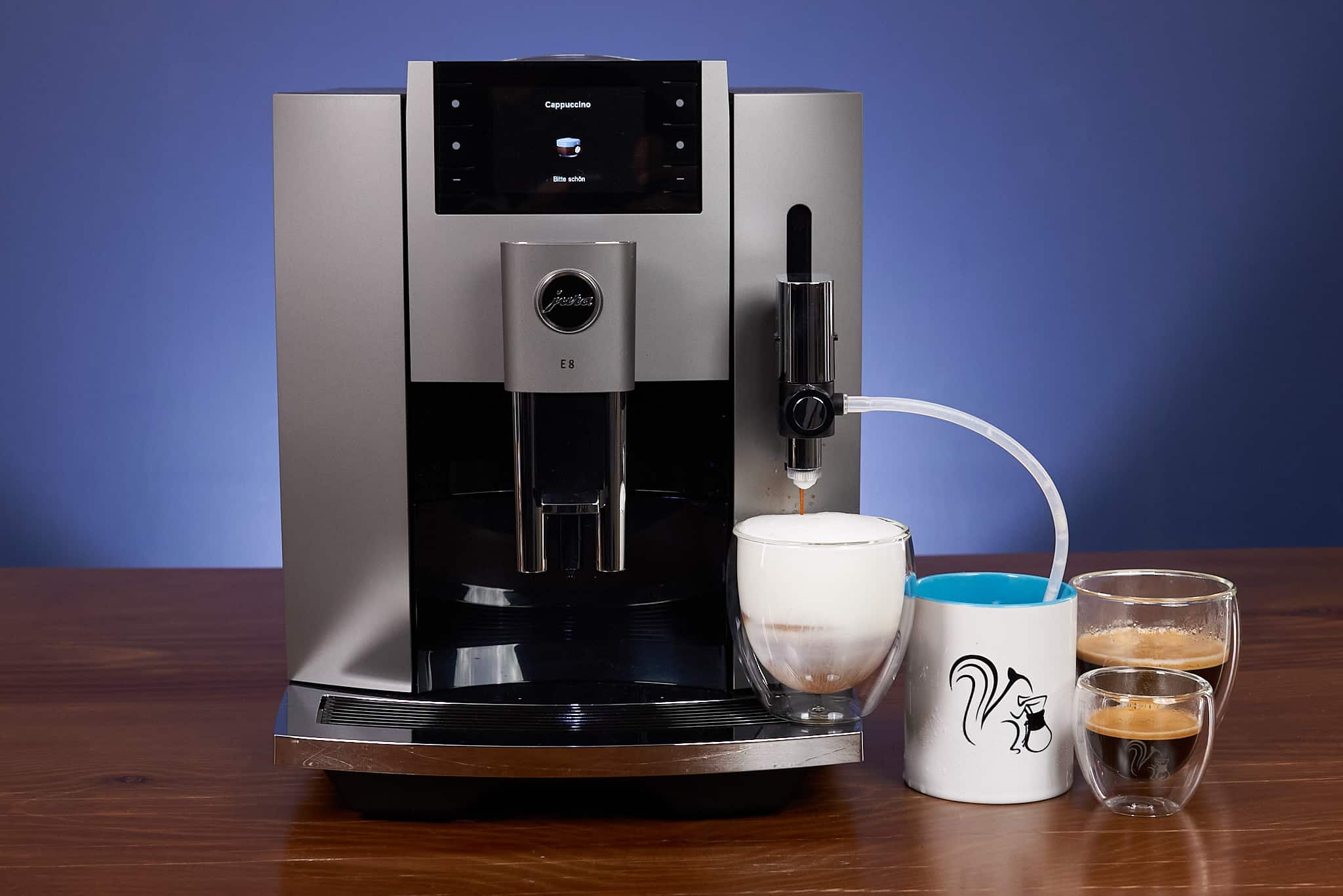
The Jura E8 is the machine most people who switch from Nespresso eventually buy - even if they start with an ENA 4 and upgrade later. It has a fully integrated one-touch milk system, 17 specialty drinks, the G3 ceramic grinder, and enough customization to satisfy anyone who starts exploring what good beans and proper extraction can produce.
The E8’s 3.5-year break-even against Nespresso pods looks long upfront, but most E8 owners keep the machine for six to ten years. Over that period, the savings become very real and the daily espresso quality is substantially better.
Ready to Make the Switch?
Read Our Full Jura E8 Review Before You Buy
The E8 is what most people who switch from Nespresso end up choosing. Full breakdown: espresso quality, milk system, maintenance, 5-year cost of ownership.
Read the Jura E8 Review →As an Amazon Associate, we earn from qualifying purchases at no extra cost to you.