The Jura Z10 and the La Marzocco Linea Mini sit at the top of the same daydream: the best coffee you can make at home, price be damned. That is where the overlap ends. The Z10 is Swiss automation at its most complete - espresso, milk drinks, and true cold brew from one touchscreen, no skill required. The Linea Mini is a scaled-down commercial machine, handmade in Florence, that hands you a bare 58 mm portafilter and assumes you will bring the grinder, the scale, and the ambition.
If you are cross-shopping these two, you are not comparing espresso machines. You are deciding what role coffee plays in your day. This page gives you the honest version of that decision: a sourced spec table, and then the thing neither brand will show you - a total-effort model of what a latte actually takes on each machine, and what a working setup actually costs once every required purchase is on the counter.
The One-Touch Side of This Comparison
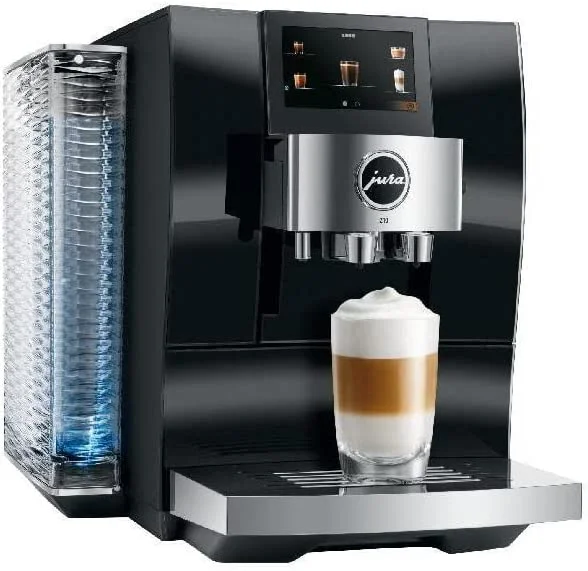
Jura Z10 - Hot, Cold, and Milk From One Machine
P.R.G. grinder built in, one-touch milk system, and Jura’s Cold Extraction Process for true cold brew. Complete out of the box.
Quick Answer
Buy the Linea Mini if the ritual is the point: it is the highest espresso ceiling money can put in a kitchen, built to be serviced for decades - but it needs a $500-$1,000 grinder, accessories, real technique, and several active minutes per drink. Buy the Z10 if the result is the point: one-touch espresso, milk drinks, and genuine cold brew for roughly half the working-setup price and a fraction of the effort. Run your own numbers in the setup-cost model below - for most households, that table decides it.
What You Are Really Buying: An Appliance or an Instrument
Strip away the price tags and these are different classes of object.
The Linea Mini is an instrument. La Marzocco builds commercial cafe machines, and the Linea Mini is the home machine that inherits that architecture: a dual-boiler system with a dedicated coffee boiler feeding an integrated commercial-style group, a separate 3-liter steam boiler, PID temperature control, and a 58 mm portafilter with 7 g to 21 g baskets. The current version adds a built-in shot timer, a two-valve pre-infusion system, and compatibility with La Marzocco’s Brew by Weight scale. Every one of those features exists so that you can control a variable - which also means every one of them is something you can get wrong. Nothing about this machine makes coffee for you. It makes coffee with you, on days when you hold up your end.
The Z10 is an appliance - the most capable one Jura makes for the home. Press a button and the Product Recognising Grinder adjusts its grind to the specific drink you chose, the machine brews through Jura’s 3D brewing unit, and the HP3 milk system draws and froths milk with automatic switching between milk and milk foam. Jura’s US product page lists 40 specialties, hot and cold, on a 4.3-inch touchscreen, with Wi-Fi and J.O.E. app control. Our full Z10 review covers the machine in depth; the short version is that it is designed so the worst drink it makes on a rushed Tuesday is identical to the best drink it makes on a lazy Sunday.
This is our analysis, not a value judgment: an instrument rewards attention and punishes neglect; an appliance ignores both. Which one belongs in your kitchen depends entirely on which behavior sounds like a feature.
Spec Table: Two Flagships With Nothing in Common
Prices are approximate street prices at the time of checking and move often - use the price links for current figures. Sources for every figure are listed at the end of this article.
| Spec | Jura Z10 | La Marzocco Linea Mini |
|---|---|---|
| Type | Super-automatic (one-touch) | Manual dual-boiler, handmade in Florence |
| Approx. price (machine only) | ~$3,300-$4,500 street | ~$6,600 list |
| Grinder | Built in - P.R.G. auto-adjusts per drink | None - separate grinder required |
| Heating | Thermoblock, 15 bar pump | Dual boiler: coffee boiler + 3 L steam boiler, PID |
| Milk | HP3 one-touch system, auto milk/foam switching | Commercial-style steam wand (manual) |
| Cold drinks | Cold Extraction Process (true cold brew) | None - hot espresso over ice only |
| Drink menu | 40 specialties per Jura’s US product page | Espresso. Everything else is your labor |
| Water tank | 81 oz / 2.4 L | 2.5 L removable (plumb-in mode available) |
| Size (W x H x D) | 12.6 x 14.3 x 16.5 in | 14.2 x 15 x 21.3 in |
| Weight | 27 lbs | 66 lbs |
| Warm-up | On-demand thermoblock, no long preheat | ~15 minutes (schedulable via app) |
| App | Wi-Fi, J.O.E. app | La Marzocco Home app (on/off schedule, steam pressure, pre-infusion) |
Two notes on that table. First, the 66-pound weight is not a flaw - it is the point. The Linea Mini is stainless steel and brass around commercial-grade boilers, and that mass is part of its thermal stability and its longevity. Second, Jura has announced a second-generation Z10 arriving in the US at a suggested $4,499 with 51 specialties and hot chocolate capability; if you are deciding when to buy, our gen-1 vs gen-2 Z10 breakdown covers the wait-or-buy call, and this comparison targets the current shipping Z10.
The Total-Effort Model: What a Latte Actually Takes
Spec tables hide the biggest difference between these machines, which is what happens between “I want a latte” and drinking one. Here is that gap, step by step. The minutes are our own estimates for a practiced user, stated so you can adjust them - neither manufacturer publishes hands-on time figures, and the only sourced figure in this table is the Linea Mini’s roughly 15-minute warm-up.
| The latte, step by step | La Marzocco Linea Mini | Jura Z10 |
|---|---|---|
| Warm-up | ~15 min from cold (passive - schedule it via the app and it is ready when you are) | On-demand thermoblock heating - no comparable preheat wait |
| Grind and dose | Weigh beans, grind on your separate grinder, distribute, tamp: ~2 min | Automatic - P.R.G. grinds to the drink you selected |
| Pull the shot | Lock in, start, watch the shot timer, judge the result: ~1 min | Automatic |
| Milk | Steam on the wand, texture by hand: ~1-1.5 min of full attention | Drawn and frothed automatically from the milk container |
| Finish and clean | Pour, purge and wipe the wand, knock the puck, rinse the portafilter: ~1.5 min | Prompted milk-circuit rinse: ~30 sec of mostly watching |
| Active minutes per latte | ~5-6 min (practiced user) | ~1 min |
| Skill required | Weeks of practice; a dial-in session with every new bag of beans | None - identical result from any member of the household on day one |
Multiply that per-latte gap across a household and a year and it stops being a detail. At two lattes a day, roughly five active minutes each on the manual side versus one on the automatic side is about 50 hours a year of hands-on coffee work. Whether those 50 hours are the best or the most annoying part of your year is precisely the question this comparison exists to ask.
The Real Price: What a Working Setup Actually Costs
The sticker prices are $6,600 versus roughly $3,300-$4,500 - see our Z10 price tracker for where the Z10 actually sells. But the sticker comparison flatters the Linea Mini, because the Z10 is a complete coffee system out of the box and the Linea Mini is not. It ships with a tamper, baskets, and a milk pitcher, and it still needs a grinder worthy of a $6,600 machine plus the bench accessories a manual workflow requires. Here is the honest accounting, with every assumption editable.
Interactive Tool
Total Cost of the Working Setup, Plus Your Yearly Ritual Time
Setup Prices (edit to match real quotes)
Your Ritual (edit if our estimates differ from yours)
| Result | Linea Mini Setup | Jura Z10 |
|---|---|---|
| Total to a working setup | ||
| Upfront difference | ||
| Hands-on time per week | ||
| Ritual time difference | ||
How the math works (no black box)
- Linea Mini setup = machine + grinder + accessories. The $800 grinder default is the middle of the $500-$1,000 band a machine of this class is typically paired with; the $250 accessories default covers a scale, knock box, distribution tool, and cleaning supplies. A tamper and a 12 oz pitcher are included with the machine, so they are not counted.
- Z10 setup = machine price only. Grinder, milk system, and drink programs are built in; the only recurring extras on both sides are beans, milk, and care products.
- Hands-on time per week = drinks/day x 7 x active minutes per drink. The per-drink figures are our own estimates for a practiced user, stated in the walkthrough table above - they are not manufacturer claims.
- Ritual time difference = weekly gap x 52, shown in hours per year.
- Excluded on both sides: beans, milk, electricity, water filters and cleaning products, resale value, and the Linea Mini’s learning-curve beans (the first bag or two partly goes to practice).
With the defaults - $6,600 machine, $800 grinder, $250 in accessories against a $3,999 Z10 - the working-setup gap is about $3,650. That difference buys a very nice vacation, or it buys the difference between owning an instrument and owning an appliance. Neither answer is wrong, but you should make it with the real numbers on the table.
If the Setup Math Decided It
The Z10 Is Complete Out of the Box
Grinder, milk system, hot and cold drinks - one price, one machine, no shopping list. Prices move often.
Cold Brew: The Z10’s Spec-Sheet Differentiator
This is the one capability where the comparison is simply one-sided, so it deserves its own section.
Jura’s Cold Extraction Process is not a marketing name for iced coffee. Per Jura’s own description, the Z10 pulses genuinely cold water through more coarsely ground coffee at high pressure, and the P.R.G. grinder switches to that coarser grind automatically when you select a cold specialty. The result the manufacturer describes - and the reason this feature headlines the machine - is true cold brew character in minutes instead of the 12-plus hours of steeping that cold brew normally demands. Our Z10 cold brew guide covers what the machine can and cannot do with it in practice.
The Linea Mini has no cold function of any kind. That is not a criticism - no manual espresso machine does - but the honest workaround is pulling a hot 58 mm shot over ice, which makes an iced latte, not cold brew. If cold drinks are an occasional novelty for you, this difference is trivia. If your household drinks cold coffee half the year, the Z10 is the only machine on this page that actually addresses your routine.
Milk: Wand Mastery vs One-Touch
Linea Mini: the 3-liter steam boiler is commercial-grade hardware, and what that spec means in practice is steam power on demand with no recovery lag between drinks. In practiced hands, a wand fed by a boiler like this produces true microfoam - the glossy, paint-like milk texture that makes latte art possible and that no automatic frothing system fully matches. That is the ceiling, and it is genuinely higher than anything Jura makes. The floor is that steaming is a skill: stretching, incorporating, judging temperature, then purging and wiping the wand after every single drink. The machine will not meet you halfway.
Z10: drop the milk tube into cold milk, choose a drink, and the HP3 system handles the rest, switching automatically between milk and milk foam for layered drinks. The texture is very good and - more importantly for a multi-person household - identical every time, from anyone, including guests. The honest recurring cost is hygiene discipline: the milk circuit needs its short prompted rinse after milk drinks and a periodic deep clean with Jura’s milk system cleaner, and that is not optional with a sealed milk path.
The pattern by now is familiar: the Linea Mini offers a higher ceiling that you must earn per drink; the Z10 offers a very good result that nobody has to earn at all.
Where the Linea Mini Wins
Being generous here is easy, because the Linea Mini is a genuinely great machine. Concretely:
- Espresso ceiling. A commercial 58 mm group, dual-boiler PID stability, adjustable pre-infusion, and a quality separate grinder give you control over every variable that matters. Dialed in on good beans, this setup can produce shots no super-automatic - the Z10 included - can match. The Z10’s extraction is excellent and consistent, but it is a preset; the Linea Mini’s is whatever you are capable of.
- Build and longevity. Sixty-six pounds of stainless steel and commercial components, hand-assembled in Florence. These machines are built on standard serviceable parts, and keeping one running for decades is a normal ownership story, not an exception. A sealed super-automatic simply does not offer that repair-forever path.
- Steam power. The 3-liter steam boiler outclasses any home automatic milk system for texture ceiling and back-to-back capacity. If latte art is a goal, only one of these machines can take you there.
- Status and joy of ownership. This is subjective and real. The Linea Mini is an icon - the home version of the machine in serious cafes, available in a palette of finishes, and the centerpiece of a kitchen in a way no appliance is. People who love these machines love them the way people love mechanical watches.
- Upgrade path. Better baskets, a bottomless portafilter, a better grinder, the Brew by Weight scale - the Linea Mini rewards every accessory and skill upgrade for years. The Z10 on day one is the Z10 in year five.
Where the Jura Z10 Wins
- Total setup cost. Roughly $3,000-$4,500 less for a working setup, per the model above, because the grinder and milk system are in the box and the accessory shopping list does not exist.
- Effort. About a minute of active time per drink versus five or six. At two drinks a day that is on the order of 50 hours a year returned - the single biggest practical difference between these machines.
- Cold brew. The Cold Extraction Process has no answer on the manual side at any price. If cold drinks matter, this alone can decide the comparison.
- Zero skill floor. Anyone in the household makes an identical drink on day one - no dial-in sessions, no sacrificial bags of beans, no bad-shot mornings, no bottleneck when three people want lattes before school.
- Drink range. Espresso to flat white to cold brew specialties from one touchscreen. On the Linea Mini, every drink beyond espresso is a manual recipe you execute.
- Counter reality. The Z10 is one 12.6-inch-wide appliance. The Linea Mini is 14.2 inches wide and 21.3 inches deep before you add the grinder, scale, knock box, and tamping station a manual bench actually requires.
- No warm-up planning. The thermoblock heats on demand; the Linea Mini wants roughly 15 minutes of preheat, which the app can schedule but you must plan around.
The Verdict
The Linea Mini is the better espresso machine in the narrow, purist sense: higher ceiling, commercial build, decades-long serviceability, and an ownership experience that borders on the emotional. The Z10 is the better coffee system in the broad sense: half the working-setup cost, a fraction of the effort, no skill requirement, and a cold brew capability the manual world cannot answer.
The question that decides it is not “which machine is better.” It is: do you want a hobby or a result? If grinding, tamping, steaming, and chasing a perfect shot sounds like the best fifteen minutes of your morning, buy the Linea Mini and never look back - nothing Jura makes will scratch that itch. If you want flagship-quality drinks, hot and cold, to simply appear while you make breakfast, the Z10 is the machine this comparison keeps pointing at. And if you are undecided about the whole automation question at a lower price point, our super-automatic vs semi-automatic guide maps the entire spectrum. Rocket’s own flagship dual-boiler gets the same treatment in our Jura Z10 vs Rocket R58 comparison, built around a learning-curve cost calculator instead of this page’s setup-cost math.
FAQ
Is the La Marzocco Linea Mini better than the Jura Z10?
As an espresso instrument, yes: the dual-boiler 58 mm platform with a good grinder has a quality ceiling no super-automatic reaches. As a daily drinks appliance, no: the Z10 delivers espresso, milk drinks, and true cold brew at one touch, at roughly half the working-setup cost. They are opposite answers to the same budget tier.
Do I need to buy a grinder with the Linea Mini?
Yes. There is no built-in grinder, and a machine at this level needs a serious burr grinder - typically $500-$1,000 or more - to perform as designed. The Z10’s P.R.G. grinder is built in and adjusts itself per drink.
Can the Linea Mini make cold brew like the Z10?
No. The closest a manual espresso machine gets is a hot shot over ice. The Z10’s Cold Extraction Process pulses cold water through coarsely ground coffee at high pressure, which Jura states produces genuine cold brew specialties in minutes.
How much does a full Linea Mini setup cost versus the Z10?
Around $7,250-$7,900 all-in with our stated assumptions ($6,600 machine, $500-$1,000 grinder, $150-$300 accessories) versus roughly $3,300-$4,500 for the complete Z10. The calculator above lets you rerun it with real quotes.
Which is better for lattes and cappuccinos?
The Linea Mini has the higher texture ceiling - its 3-liter steam boiler and commercial wand can produce true microfoam with practice. The Z10 makes consistent one-touch milk drinks with zero technique. Multi-latte households almost always live better with one-touch.
Which machine lasts longer?
They age differently. The Linea Mini is built on standard commercial parts and can be serviced more or less indefinitely, which is central to what La Marzocco sells. Jura machines commonly serve 8-10 years with proper care, but as sealed appliances their major repairs go to a service center. If forever-rebuildability matters to you, that is a real Linea Mini advantage.
Decided on the Result Over the Ritual?
Jura Z10 - The Flagship That Does It All for You
Built-in P.R.G. grinder, one-touch milk, hot and cold specialties, and about a minute of your attention per drink. Prices move often - check the current one.
Check Z10 Price on Amazon →For how the Z10 and the rest of the Jura lineup stack up against other brands, see our full competitor comparison guide.
All prices are approximate list or street prices that change frequently - use the price buttons on this page for current figures. The latte walkthrough minutes, the $500-$1,000 grinder band, and the accessories budget in the setup-cost model are our own stated estimates, not manufacturer figures; neither manufacturer publishes hands-on time data. Espresso and milk quality statements for both machines are reasoned from confirmed hardware specifications and manufacturer descriptions, not from hands-on testing of the Linea Mini. Specifications last checked: July 2026.
One-Touch Flagship
Jura Z10
P.R.G. grinder, hot and cold specialties, one-touch milk.
Check Z10 Price on Amazon →Hand-Built Icon
La Marzocco Linea Mini
3 L steam boiler, commercial 58 mm group - bring your own grinder.
Check Price on Amazon →As an Amazon Associate, we earn from qualifying purchases at no extra cost to you.